

Anatomy of a Brand | Case Study #1
By Tomasz Ziółkowski | Brand Strategy Consultant | 30 years in FMCG
A few months ago, I was working on a brand strategy project for a cosmetics company.
During one of our sessions, my client showed me a competitive market analysis.
One slide stopped me cold.
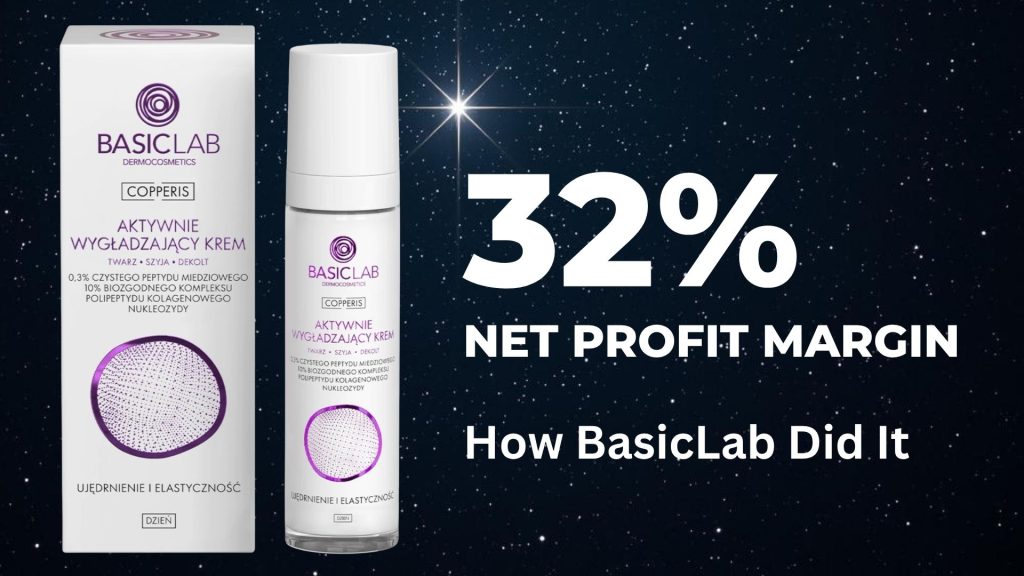
It featured a Polish skincare brand called BasicLab with approximately 32% net profit margins on €20 million in revenue.
In an industry where average net margins are often closer to 8%, that number does not just stand out.
It forces you to ask why.
So I started digging. And more than once, I caught myself doing what I can only describe as picking my jaw off the floor.
Because in my view, BasicLab is quietly writing a new playbook for modern FMCG brand strategy.
A Brand Built on Different Principles
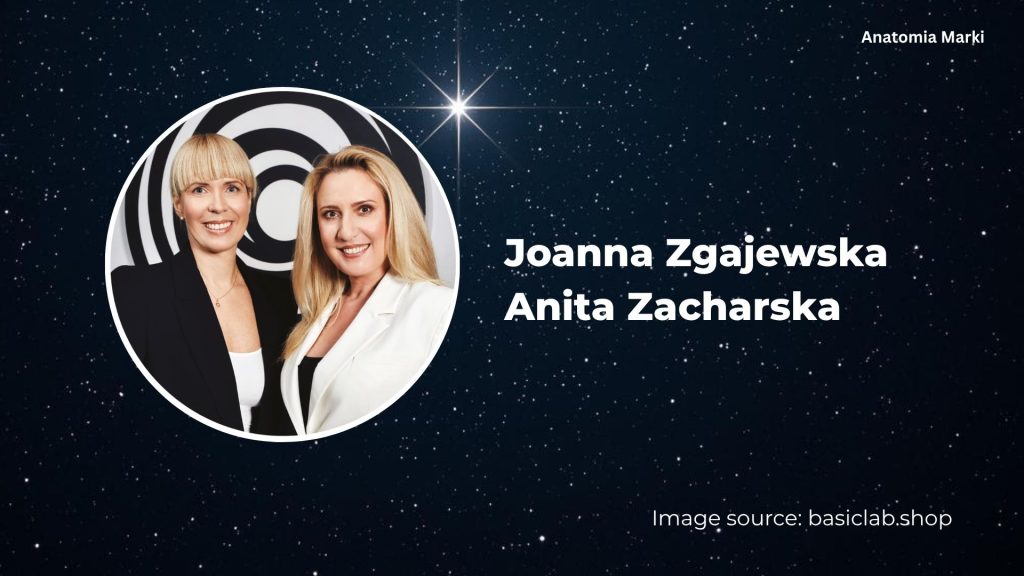
BasicLab Dermocosmetics was founded in 2017 by two women — Joanna Zgajewska and Anita Zacharska — both experienced executives from large pharmaceutical and cosmetics companies.
They knew the industry from the inside.
And they had seen something most consumers never notice: many promises in the cosmetics category are built more on marketing language than on real product substance.
When you look at how the brand developed from day one, one thing becomes clear.
This was never meant to be just another skincare brand.
The ambition was to build a brand that would operate by a different set of rules than most of the market.
The Numbers That Need Explaining
In its seventh year of operation — 2024 — BasicLab reportedly achieved:
- €20M in revenue
- 32% net profit margin
- 18% year-over-year growth
But there is one more number that makes this case especially unusual for an FMCG brand at this scale:
Around 80% of sales come from online channels.
For a consumer brand of this size, that is highly unusual.
And it does not happen by accident.
BasicLab operates in one of the most competitive categories in consumer goods — crowded with established brands, private label pressure, and constant new entrants. Which makes these results even more remarkable.
So what exactly is driving them?
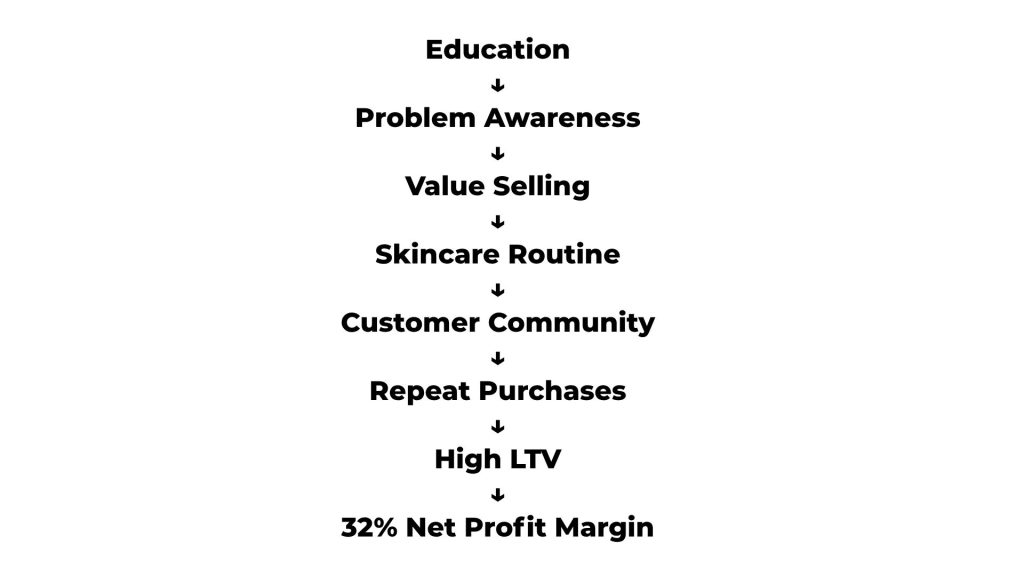
The BasicLab Marketing System
When you step back and look at the strategy as a whole, what you see is not a collection of isolated tactics.
It is a coherent system in which each element reinforces the next.
Many brands try pieces of this model.
What makes BasicLab different is not one brilliant trick.
It is the consistency of the whole system.
Pillar 1: Brand Building Without Mass Advertising
The first and perhaps most counterintuitive part of the BasicLab model is this:
The brand was built without relying on mass advertising.
Instead, from the beginning, the company invested in high-quality educational content about skincare.
Customers could learn:
- how retinol works,
- what ceramides do for the skin barrier,
- why the hydrolipid barrier matters,
- and how to choose ingredients for specific skin needs.
Instead of building awareness mainly through media spend, the brand used:
- free downloadable ebooks,
- educational articles,
- ingredient explainers,
- and expert content tied to real skincare problems.
Much of this content was available in exchange for an email address.
That created something more valuable than reach.
It created authority, trust, and a direct relationship with the customer.
And it did so at a fraction of the cost of a traditional media budget.
Education as a Conversion Mechanism
This approach had another effect that is easy to overlook.
Customers began to understand their own skin better.
They learned what ingredients they needed, why concentrations mattered, and what specific problem a product was meant to solve.
In other words, BasicLab reversed the classic FMCG marketing logic.
Instead of:
Product → Advertising → Sale
the brand built a different sequence:
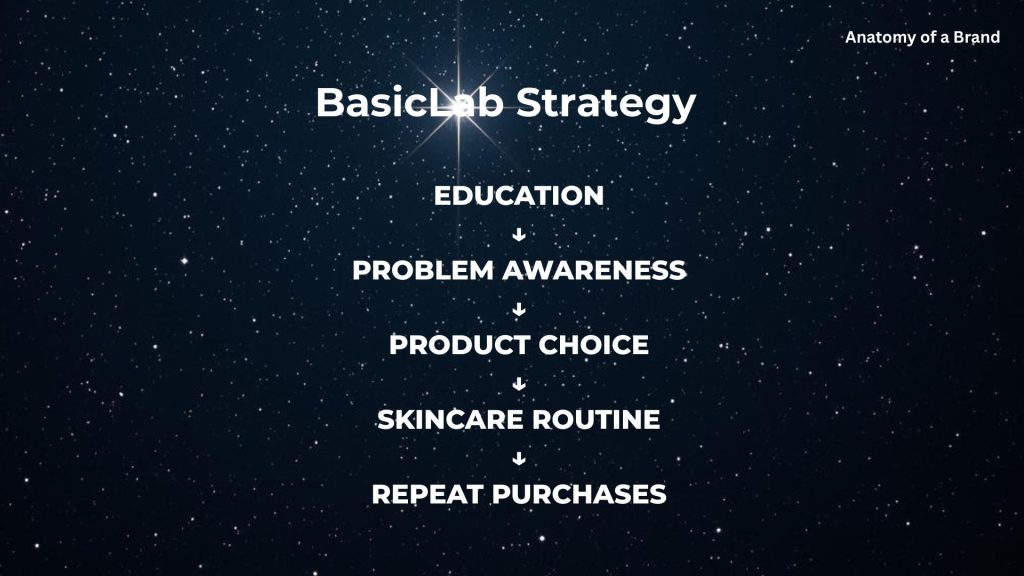
Education → Problem awareness → Product as the solution
It works a bit like a dermatologist visit.
First comes diagnosis. Then comes treatment.
And when the customer already understands the problem and the mechanism behind the solution, the product choice becomes much easier.
Pillar 2: Skincare Routines Instead of One-Time Purchases
The founders understood something many FMCG marketers know in theory, but far fewer build into their business model:
Acquiring a new customer is usually far more expensive than keeping an existing one.
So the system was not built around constant one-off acquisition.
It was built around something structurally more valuable: helping customers adopt a repeatable skincare routine.
A customer with a morning and evening ritual does not buy one product.
She buys four or five.
And she comes back every two or three months.
That changes the economics of the business in a very direct way:
- larger basket size,
- higher customer lifetime value (LTV),
- lower cost-to-serve per unit sold.
This is one of the most important strategic questions any brand can ask itself:
Are you building routines, or are you selling individual products?
Because the answer has a major impact on margins.
Pillar 3: A Loyalty Program That Turns Customers Into Contributors
BasicLab created a loyalty program called BasicLovers.
But describing it simply as a loyalty program does not fully capture what it does.
Customers can earn points not only through purchases, but also by:
- writing product reviews,
- completing surveys,
- and engaging with the brand community.
This matters because it changes the role of the customer.
The customer is not just buying from the brand.
She is helping build the brand ecosystem.
One visible effect of this model is a large and continuously growing base of authentic product reviews.
And in categories like skincare, peer reviews are among the strongest purchase drivers available.
That is what makes this strategically and financially interesting.
Most brands spend heavily to reach new consumers. BasicLab built a system in which loyal customers help create the content that drives future sales.
The cost is a fraction of a traditional advertising budget.
The credibility is far higher.
Pillar 4: Value Selling at the Product Level
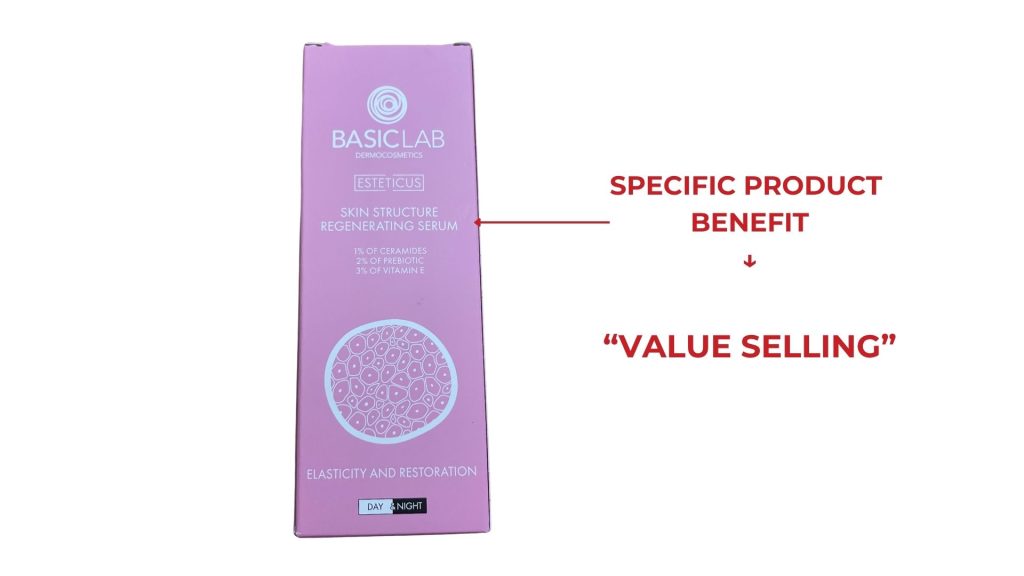
This is the element that impressed me most.
And in my opinion, it is also the part with the broadest implications for FMCG brand strategy.
When I looked closely at BasicLab’s product communication, I realized something important.
BasicLab does not really sell cosmetics.
It sells the confidence that your skin is getting exactly what it needs.
Look at the brand’s packaging and you will see a highly consistent communication structure:
- brand logo
- product line name
- product name with a specific consumer benefit
- active ingredients with percentage concentrations
- a reinforcing benefit statement
This is what I call Value Selling.
It means designing product communication in such a way that the consumer immediately sees specific value for themselves — usually the solution to a clearly defined problem.
When that happens, the product does not feel like one option among many.
It starts to feel like the most logical choice.
And when a brand reaches that point, price becomes less central to the decision.
This is the same logic I describe in more detail in my free ebook, Value Selling — How to Sell Value, Not Just a Product.
You can download it here: https://ziolkowskimarketing.com/download-the-e-book/
Pillar 5: Packaging as a Branding System Built for E-Commerce
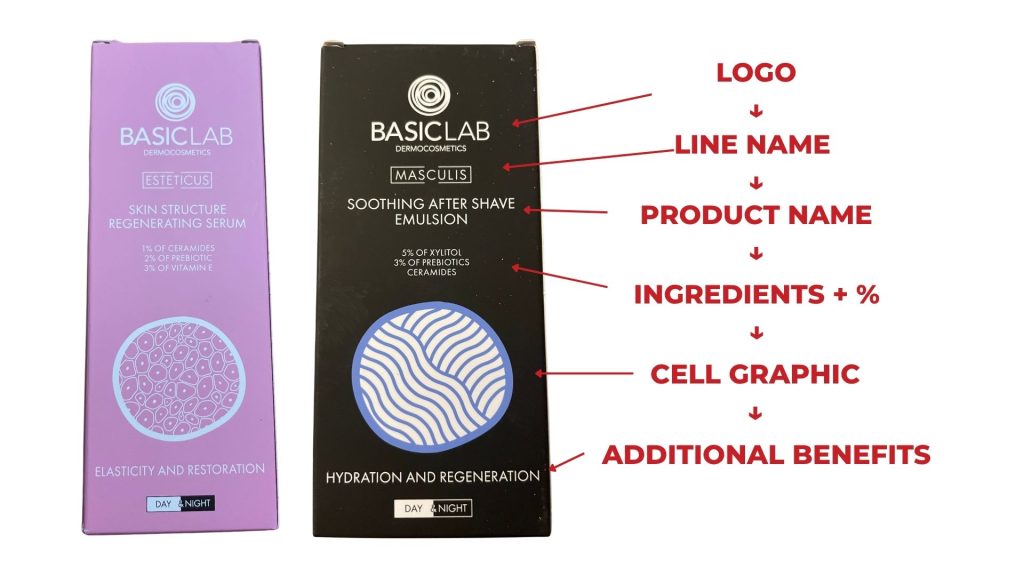
BasicLab’s portfolio now includes more than 100 products.
And yet the packaging looks as if it was created within one unified system — same layout, same communication hierarchy, same typography, same visual language.
That is rare.
In most FMCG organizations, portfolios expand over time and visual coherence gradually weakens. Here, coherence has been maintained at scale.
There is also another detail that matters.
The packaging uses a vertical format, which supports consistency on screen and makes navigation across the range easier for the customer in e-commerce.
But the most interesting operational insight is this:
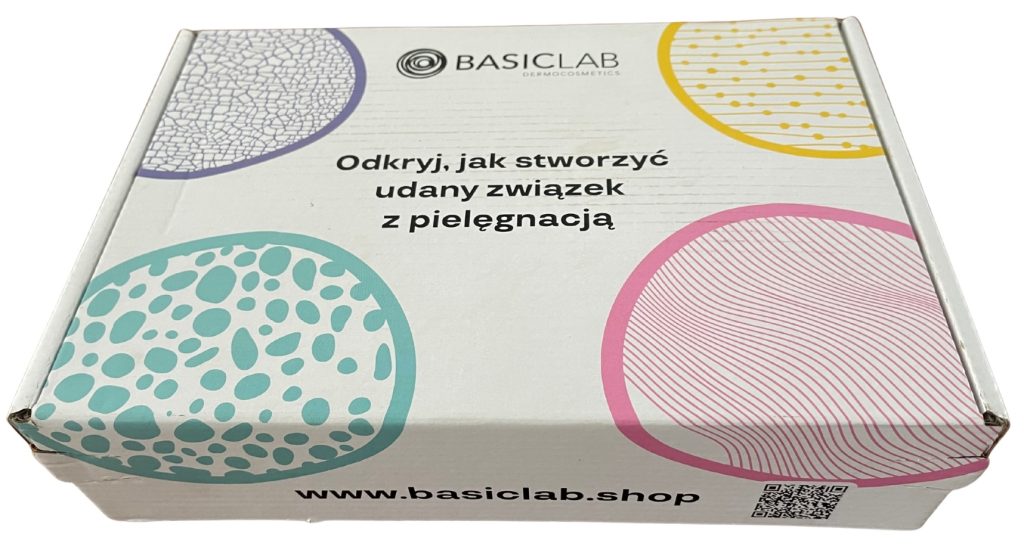
The whole portfolio can be shipped using fewer than ten box formats.
That may sound like a small packaging decision.
It is not.
Not when around 80% of your sales come through online channels.
Standardized shipping formats reduce fulfillment complexity, lower packaging costs, minimize waste, and simplify warehouse operations.
In other words, a packaging system does not only shape brand perception.
It can also improve operating economics.
Every Touchpoint Builds the Relationship
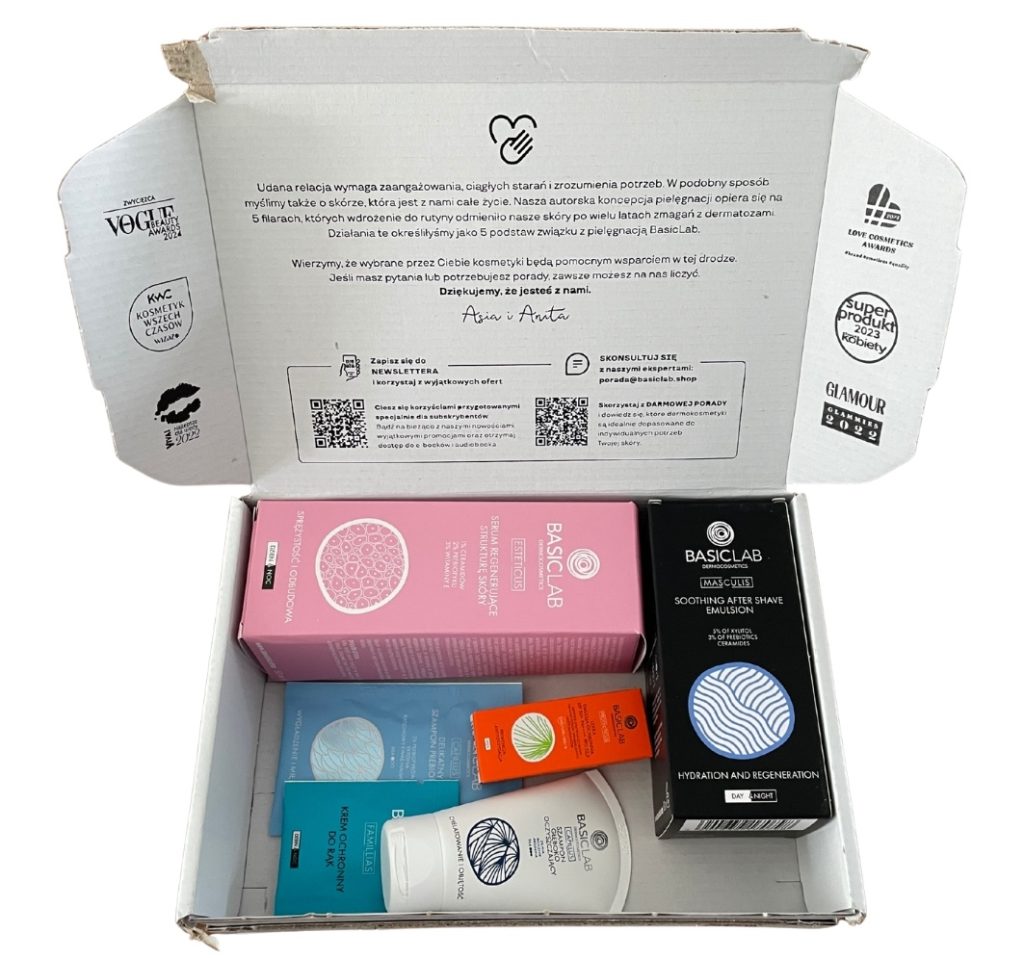
There is one more detail that becomes visible only after purchase.
The shipping box itself is part of the brand experience.
Inside a BasicLab order, customers may find:
- the brand promise and proof points,
- product samples,
- a thank-you note,
- an invitation to join the community,
- and an incentive for the next purchase.
The brand uses every moment of contact to deepen the relationship.
Not only the moment of purchase.
Every touchpoint matters.
Why BasicLab Earns 32% Net Margins
Once you see the full system, the numbers stop looking mysterious.
This is not luck.
And it is not just a category anomaly.
It is the result of a deliberately designed customer-centered model.
The financial logic becomes easier to understand when you break it down:
No mass advertising
→ more resources available for product quality, education, and relationship building
→ higher trust and stronger conversion
Routine-based consumption
→ larger baskets and more frequent repeat purchase
→ higher lifetime value
Community and reviews
→ lower need for expensive paid persuasion
→ lower acquisition cost and higher credibility
Value Selling
→ less focus on price comparison
→ stronger premium positioning and margin protection
Packaging designed for e-commerce
→ lower fulfillment cost
→ better operational leverage at scale
Each pillar either lowers cost, increases value, or does both at the same time.
That is why 32% net margins in a category averaging around 8% become not just possible, but strategically understandable.
3 Strategic Lessons From the BasicLab Case Study
1. Education builds authority more efficiently than advertising builds reach
When customers understand the problem, the mechanism, and the solution, they are far more likely to trust the brand.
That trust often creates stronger long-term value than a one-time awareness spike.
2. Community can reduce acquisition cost and increase lifetime value
A customer who feels connected to a brand is less likely to reassess alternatives every time they buy.
That changes retention, advocacy, and overall customer economics.
3. Value Selling shifts the conversation from price to value
A brand that clearly communicates the solution to a specific problem does not compete in the same way as a brand that merely presents a product.
The conversation changes.
And when the conversation changes, margins often change with it.
What This Means for Your Brand
The BasicLab story points to something larger than one successful cosmetics company.
In the age of digital channels, social media, and direct customer access, competitive advantage in FMCG is less and less built through advertising pressure alone.
More often, it is built through a well-designed system of customer relationships.
The brands most likely to win in the next decade will not necessarily be the ones with the largest media budgets.
They will be the ones that understand their customers deeply enough to educate them, build community around them, and design every touchpoint — from packaging to post-purchase experience — to strengthen the relationship.
BasicLab is a strong example of how that model can work.
Not only in theory.
But at scale.
And with industry-leading profitability.
The real question is not whether every brand can copy this system in full.
It is which parts of it could work for yours.
This article is part of the Anatomy of a Brand series — strategic case studies of brands that play by different rules.
Next in the series: coming soon.
Tomek Ziółkowski is a brand strategy consultant with 30 years of FMCG experience, including senior roles at Carlsberg, Tchibo, and Reckitt Benckiser. He works with brand owners and C-suite executives on brand strategy, portfolio architecture, and go-to-market planning.
→ Download the free Value Selling ebook
→ Explore brand strategy consulting
